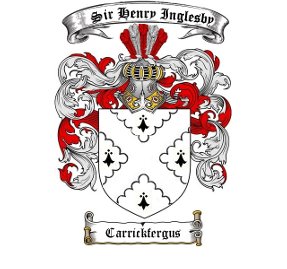
Our Captain
Sir Henry Inglesby
Ing-gil-by
Inglesby (the town of the English, or Angles) — perhaps first named at the time the Angles invaded Britain. "Ing-gil-by", in Saxon, means "the town near the brook in the narrow valley". The name probably comes from a town in Lincolnshire, England.
Source: An Etymological Dictionary of Family and Christian Names; William Arthur, M.A.; New York, 1857.
Inglesby or Ingoldsby
It will be noted that Sir Henry Inglesby is entered both with the surname Inglesby and Ingoldsby. Schomberg, in his letters, uses the Inglesby spelling — as do we.
His Life
Sir Henry Inglesby (Ingoldsby), 1st Bt., was born in 1622. He was a son of General Sir Richard Ingoldsby, Bart., whose mother was Oliver Cromwell's aunt; Sir Henry's mother was Elizabeth, daughter of Sir Oliver Cromwell, Knight of the Bath, eldest brother of the Protector's father.
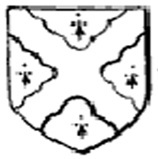
He held at first a commission in the royal army, but subsequently, deserting his ill-fated master, became a colonel in the service of the parliament. He went afterwards to Ireland, where he was most useful to his party. He became Military Governor of Limerick and married Anne, daughter of Sir Hardress Waller of Castletown, obtaining large grants of confiscated estates in the Barony of Clanwilliam, Co. Limerick, and in Clare and Tipperary.
Sir Henry was returned to parliament by the counties of Kerry, Limerick and Clare, in 1654, 1656 and 1650. Foreseeing the restoration of the monarchy, he hastened from Ireland, took possession of Windsor Castle — then in the hands of the republicans — and garrisoned it for the parliament. For this service he was created a BARONET by Charles II on 30th August, having already obtained a similar dignity from the Protector Cromwell in 1658.
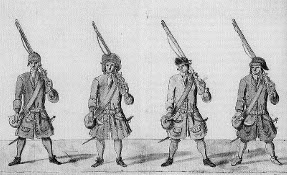
During the Glorious Revolution he served in King William III's army, when "Sir Henry Inglesby, along with Lord Roscommon, and Colonel Hamilton, and officers, were sent over into England to recruit for their empty ranks."
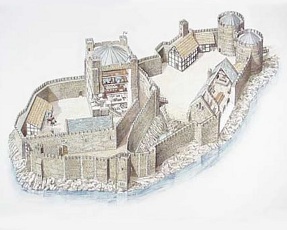
The Duke of Schomberg, "after the Reduction of Carrickfergus, leaving a good Garrison in it under the Command of Sir Henry Inglesby, and having given Orders for the necessary Reparations of the Town, has begun his March towards Belfast." (Extract of a letter from Schomberg to King William, 17th August 1689, after the capture of Carrickfergus.)
On 8 March 1689 Major General Joseph Sabine was appointed lieutenant in Colonel Sir Henry Ingoldsby's regiment, raised that year for William's campaign in Ireland. Owing to losses the regiment was disbanded on 9 January 1690.
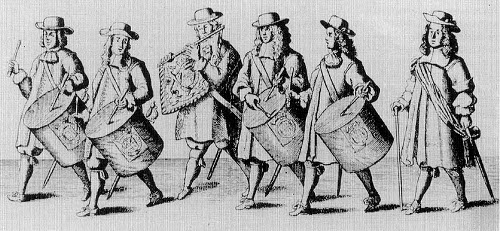
He died in Ireland in 1701, one of the oldest officers in the army, and left by Anne, his wife, a son and successor. His children were: Anne Ingoldsby; Henry Ingoldsby; Sir George Ingoldsby, 2nd Bt.; and Sir Charles Ingoldsby.